Asteroid To Hit Earth: Understanding The Threat And Preparing For The Future

Asteroid To Hit Earth: Understanding The Threat And Preparing For The Future - Addressing the asteroid threat requires global cooperation and coordination. International agreements and initiatives facilitate the sharing of data and resources, ensuring a unified approach to asteroid defense. By working together, nations can enhance their ability to protect Earth from potential asteroid impacts. NASA warns chances of 'citydestroying' asteroid hitting Earth in 2032
Addressing the asteroid threat requires global cooperation and coordination. International agreements and initiatives facilitate the sharing of data and resources, ensuring a unified approach to asteroid defense. By working together, nations can enhance their ability to protect Earth from potential asteroid impacts.
International space agencies such as NASA, ESA, and JAXA play a crucial role in monitoring and mitigating the asteroid threat. Collaborative efforts and shared data help enhance our understanding of asteroids and improve detection and deflection technologies.
We invite you to share your thoughts and questions in the comments section below. For more information on space exploration and asteroid research, explore our other articles. Together, we can stay informed and contribute to the global effort to protect Earth from asteroid threats.
Earth has experienced several significant asteroid impacts throughout its history. The most famous event is the asteroid impact that contributed to the extinction of the dinosaurs approximately 66 million years ago. More recent events, such as the Tunguska explosion in 1908 and the Chelyabinsk meteor in 2025, highlight the ongoing threat posed by asteroids.
Asteroids are rocky remnants left over from the early formation of our solar system about 4.6 billion years ago. They are primarily found in the asteroid belt between Mars and Jupiter, but some stray into Earth's vicinity. These celestial bodies vary in size, ranging from small boulders to massive rocks several kilometers in diameter. Understanding their composition and behavior is crucial in assessing the risk they pose to our planet.
While the probability of a large asteroid hitting Earth is relatively low, the potential consequences are severe. Scientists estimate that an asteroid large enough to cause global devastation is likely to occur once every few million years. However, smaller asteroids, which can still cause significant damage, may strike more frequently.

The possibility of an asteroid to hit Earth is a real concern. While most asteroids pose no immediate threat, the ones that enter Earth's atmosphere can cause significant damage. The impact of a large asteroid could result in widespread destruction, climate changes, and even mass extinctions. Scientists are constantly monitoring near-Earth objects (NEOs) to identify potential threats.
Various strategies are being explored to mitigate the threat of an asteroid to hit Earth. These include:
As we explore this critical issue, we will also examine the role of international space agencies and the technology being developed to detect and deflect asteroids. By the end of this article, you will have a clearer understanding of the risks posed by asteroids and the proactive measures being implemented to safeguard our planet.
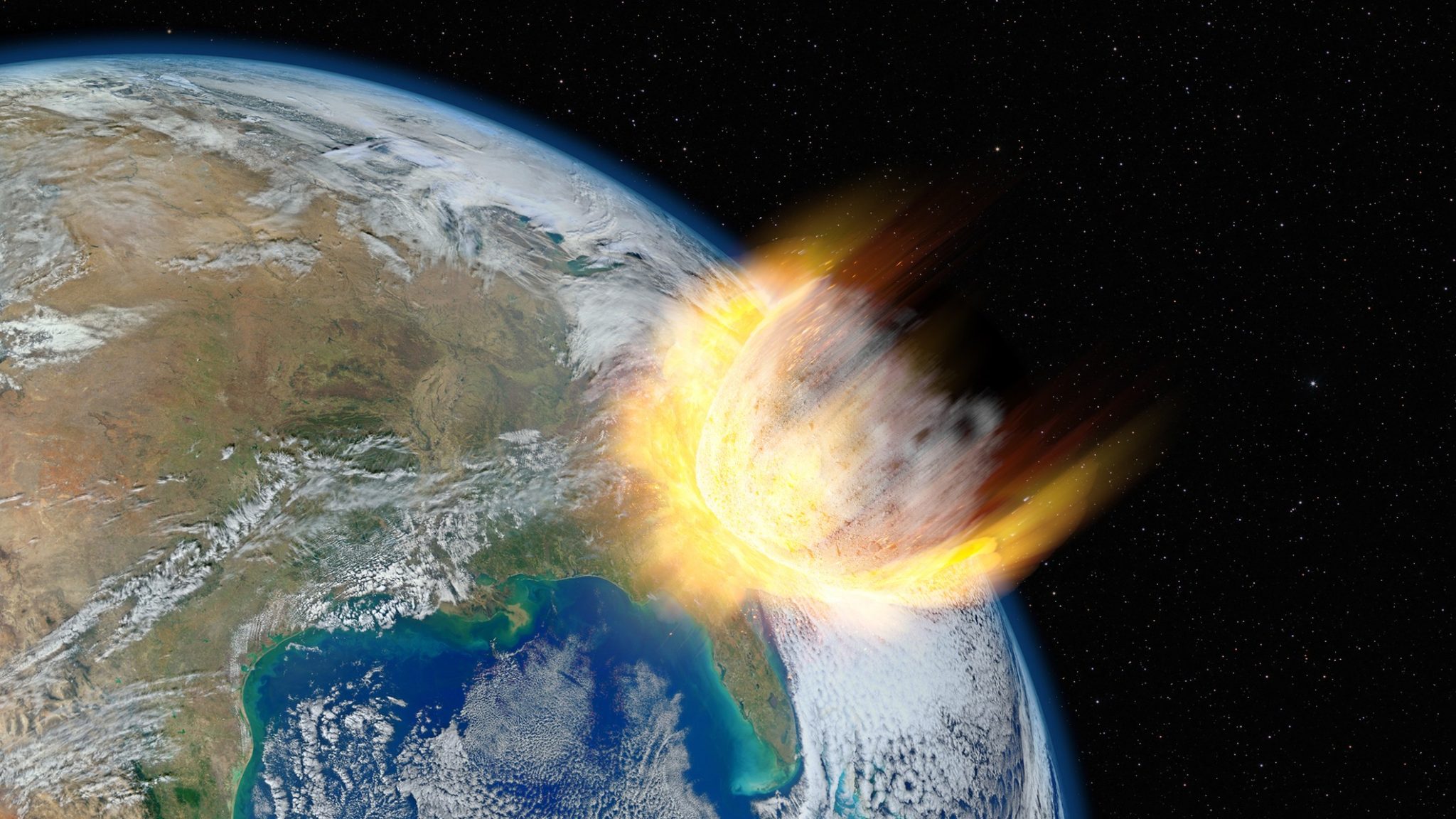
Imagine waking up to the news that an asteroid is on a collision course with Earth. This isn't just science fiction; it's a real possibility that scientists and space agencies around the world are actively monitoring. The potential impact of an asteroid hitting Earth could be catastrophic, but how real is the threat, and what can we do to prepare? In this article, we will delve into the world of asteroids, their potential to hit Earth, and the measures being taken to mitigate this threat.
The possibility of an asteroid to hit Earth is a serious concern that demands our attention. By understanding the nature of asteroids, their detection, and the measures being taken to mitigate the threat, we can better prepare for such an eventuality. Space agencies and scientists worldwide are actively working to enhance our ability to detect and deflect asteroids, ensuring the safety of our planet.
Advancements in technology have significantly improved our ability to detect asteroids. Ground-based telescopes, space-based observatories, and radar systems are used to track NEOs. The goal is to identify potential threats early enough to implement mitigation strategies.